Measure analysis of surface roughness
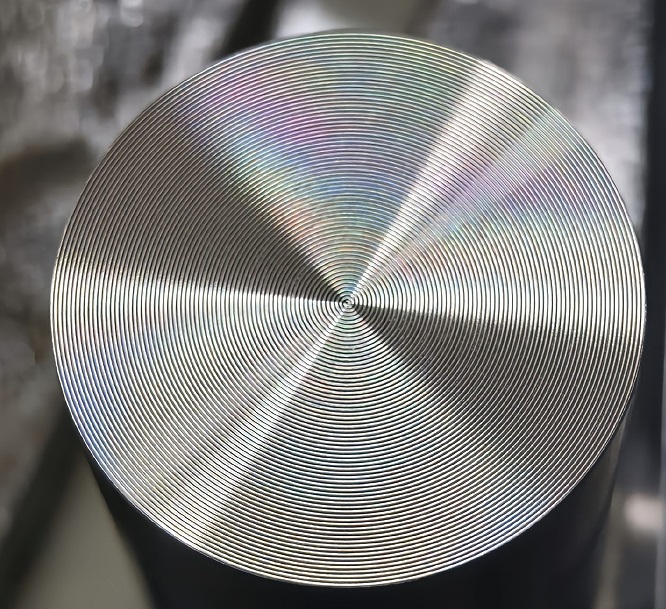


During hot working (forging, rolling, heat treatment) of titanium and titanium alloys, a dense oxide scale forms on the surface, and oil residues and impurities may remain from the processing.
These surface contaminants not only affect appearance but, more importantly, can compromise the quality of subsequent processes such as welding, coating, and assembly, and may even become potential sources of cracks.
The purpose of acid pickling is to thoroughly dissolve and remove the oxide scale through chemical means, exposing a clean, active titanium substrate surface.
In high-end manufacturing sectors such as aerospace, precision manufacturing, chemical equipment, and medical devices, chemical acid pickling has become a widely used and indispensable surface treatment method.
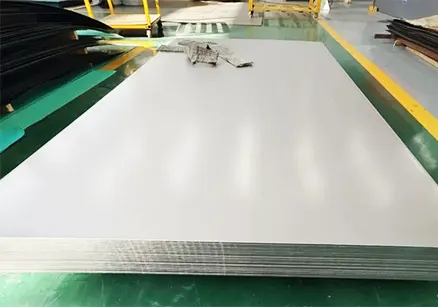
The most commonly used system for acid pickling titanium alloys is a mixed acid solution of hydrofluoric acid (HF) and nitric acid (HNO₃).
The roles of the two acids: In the HF-HNO₃ system, pickling is a cyclic process of “etching–dissolution–passivation.”
Hydrofluoric acid is primarily responsible for dissolving the passivation film on the titanium surface and etching the substrate;
Nitric acid primarily acts as a passivating agent while also supplying H⁺ ions to accelerate the dissolution reaction of the titanium alloy.
We can achieve the desired pickling results only through their synergistic action.
Concentration Ratios: Technicians generally keep the HF concentration between 3% and 5% and hold the HNO₃ concentration at roughly 15%–30%.
Studies have shown that for TC4 titanium alloy forgings, a formulation of 1%–3% HF + 25%–30% HNO₃ yields optimal results.
For ZTC4 titanium alloy castings, a combination of 110 mL/L HF + 300–330 mL/L HNO₃ achieves an etching rate of approximately 12–13 μm/min and good surface quality.
Temperature: Generally maintained between room temperature and 45°C.
Excessively high temperatures accelerate the volatilization of hydrofluoric acid, leading to acid waste and environmental pollution;
Conversely, excessively low temperatures slow the reaction rate, affecting production efficiency.
Duration: Should be flexibly adjusted based on the thickness of the oxide layer, typically ranging from 1 to 4 minutes.
Excessive duration may result in over-etching.
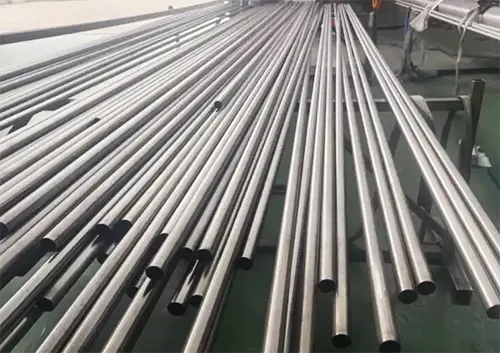
This is the issue that requires the most vigilance during the acid pickling of titanium alloys.
Hydrogen is generated during the pickling process (2Ti + 6HF = 2TiF₂ + 3H₂↑), and these hydrogen ions may be reduced to atomic or molecular hydrogen.
Molecular hydrogen tends to diffuse into the metal;
Once it enters the titanium material, it can cause hydrogen embrittlement, making the component sensitive to stress concentration and significantly reducing its impact toughness and notched tensile strength, potentially leading to brittle fracture even under relatively low stresses.
Hydrogen embrittlement was once one of the major issues in industrial applications of titanium.
Key Control Point: Always maintain a nitric acid to hydrofluoric acid ratio greater than 5.
Nitric acid, acting as an oxidizing agent, can suppress hydrogen evolution and diffusion.
Other Key Points: Avoid exceeding 45°C during acid pickling, as high temperatures accelerate the diffusion of hydrogen atoms;
Strictly control the pickling time to prevent excessive hydrogen absorption caused by over-pickling, and ensure thorough rinsing with water immediately after pickling.
If hydrogen content exceeds the limit after pickling, technicians can apply vacuum annealing to remove hydrogen, titanium reversibly adsorbs hydrogen.
Studies have shown that after vacuum annealing following pickling, the surface hydrogen content of ZTA15 titanium alloy consistently meets the <0.01% requirement, preventing hydrogen embrittlement.
As environmental regulations become increasingly stringent, the titanium alloy pickling industry is also evolving toward greener and smarter practices:

This process uses an HF-free pickling system, such as the HNO₃+HCl+NaF formulation, which ensures a gentle pickling process without the generation of dense fumes.
Laser beams are used to instantly remove oxide layers, eliminating the need for chemical solutions and preventing environmental pollution.
Laser cleaning offers the advantages of high flexibility and efficiency, making it a suitable alternative to traditional acid pickling.
Pangang has launched the second phase of its technical research and development project to replace acid pickling with laser cleaning.
Technologies such as the fluoride precipitation method are used to recover acid pickling waste liquids, enabling the recycling of pickling solutions and the recovery of titanium salts.
While the acid pickling of titanium alloys may seem simple, it actually involves multidisciplinary knowledge spanning electrochemistry, materials science, and process control.
If the acid pickling process is not performed properly the first time, it can lead to subsequent welding defects, coating failure, or even premature scrapping of the product.
Performing the acid pickling process correctly is the best way to ensure product quality.